REPLICATE-CER
REPLICATE-CER (Replication Infrastructure for Computing Education Research) is an NSF-funded project developing a new model for conducting collaborative, multi-institution computing education research.
Rather than studying teaching and learning at a single institution, REPLICATE-CER brings together faculty from a wide variety of colleges and universities to conduct coordinated studies using a shared research protocol. By collecting comparable data across many instructional contexts, we can build stronger evidence for what works in computing education—and better understand when educational practices succeed across diverse institutional settings.
Current Opportunity
Applications are now open for the inaugural Replication Team.
Study Design
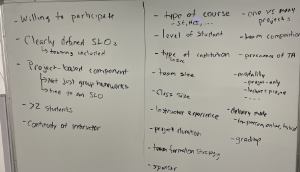
Meet the faculty who collaboratively designed the first REPLICATE-CER study.
Current Study
Improving Assessment of Student Teamwork
Our inaugural study focuses on a question that affects nearly every computing program:
How can instructors better align the way they assess teamwork with the teamwork skills they want students to develop?
Student teamwork is a cornerstone of computing education, yet instructors assess team performance in many different ways. Some emphasize peer evaluations, others focus on project artifacts, while still others rely primarily on instructor observations. These assessment practices may encourage very different student behaviors and may or may not reflect an instructor’s intended learning outcomes.
Through a coordinated, multi-institution study, REPLICATE-CER will investigate how changes to teamwork assessment influence student collaboration across a diverse range of computing courses.
Why Multi-Institution Research?
Computing courses differ substantially across institutions.
Students, class sizes, institutional missions, and instructional practices all vary, making it difficult to know whether findings from a single study will generalize elsewhere.
REPLICATE-CER addresses this challenge by developing carefully specified study protocols that can be implemented across many institutions while still allowing instructors flexibility to teach in ways that best fit their local context. Rather than asking whether an intervention worked in one course, we seek to understand how consistently it works across many different educational environments.
Project Timeline
| Date | Milestone |
|---|---|
| ✅ June 2026 | Replication Design Team workshop completed |
| Summer 2026 | Recruitment of Replication Team participants |
| Fall 2026 | Study preparation and local IRB approvals |
| 2026–2027 Academic Year | Study implementation and data collection |
| Summer–Fall 2027 | Cross-site analysis |
| 2028 | Dissemination of results and replication resources |
Design Workshop
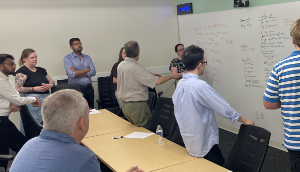
In June 2026, faculty from institutions across the United States gathered at the University of Virginia for the inaugural REPLICATE-CER Design Workshop. During this intensive collaborative meeting, participants developed the first shared research question, designed the study protocol, identified common data collection procedures, and established the framework that participating institutions will implement during the replication study.
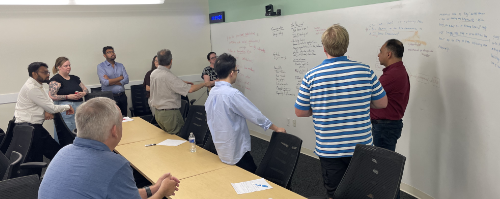
The workshop emphasized collaboration, discussion, and consensus-building, ensuring that the study reflects the perspectives and experiences of educators representing a variety of institutional contexts.
Get Involved
Replication Team (Currently Recruiting)
We are currently seeking computing educators interested in implementing the inaugural REPLICATE-CER study during the 2026–2027 academic year.
Participants will:
- Implement the shared study protocol in one or more computing courses
- Receive study materials, IRB guidance, and ongoing mentoring
- Participate in regular cohort meetings with collaborators across institutions
- Contribute to joint publications and cross-site analyses
- Receive a stipend for their participation
Apply to Join the Replication Team
Funding